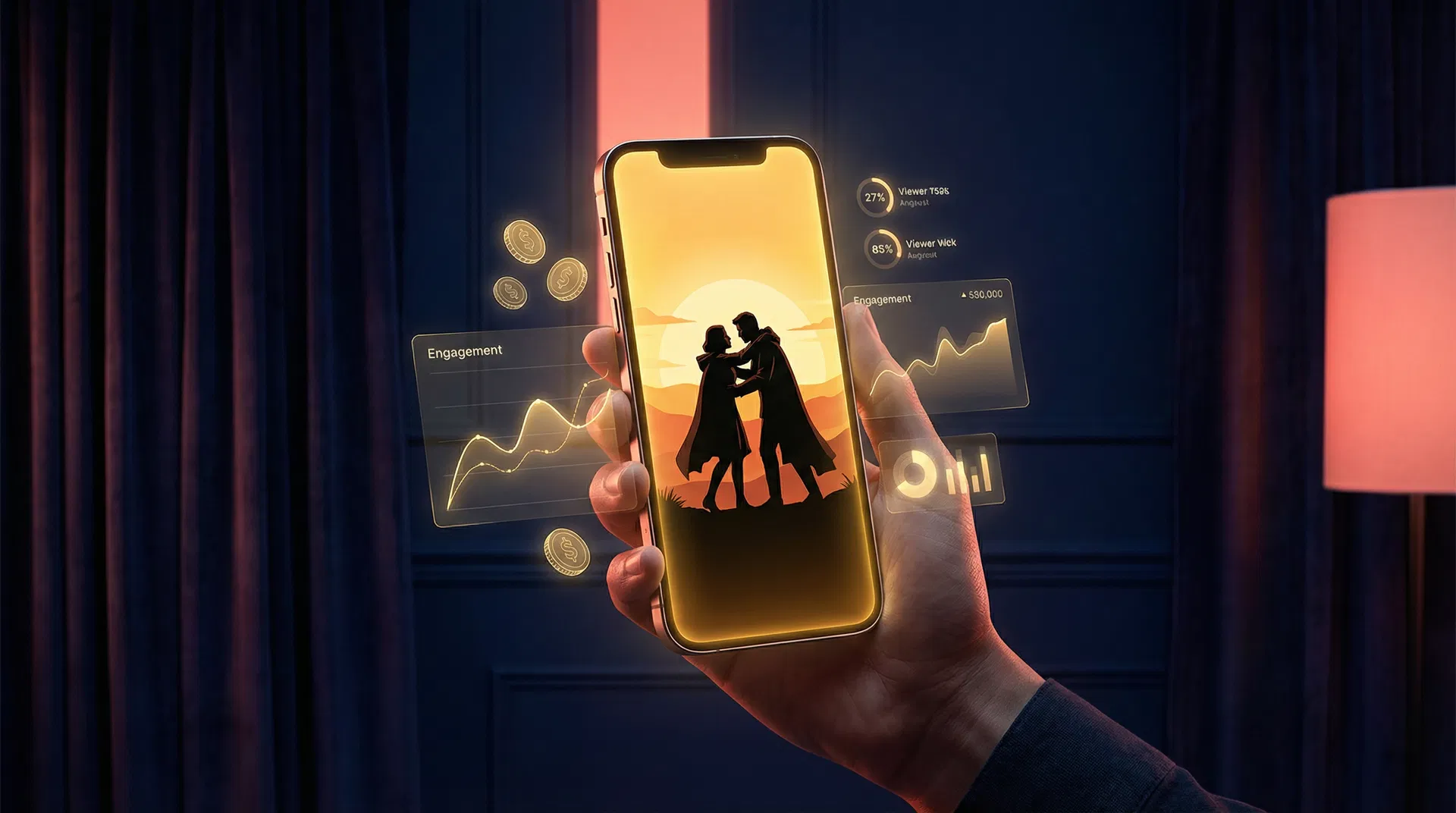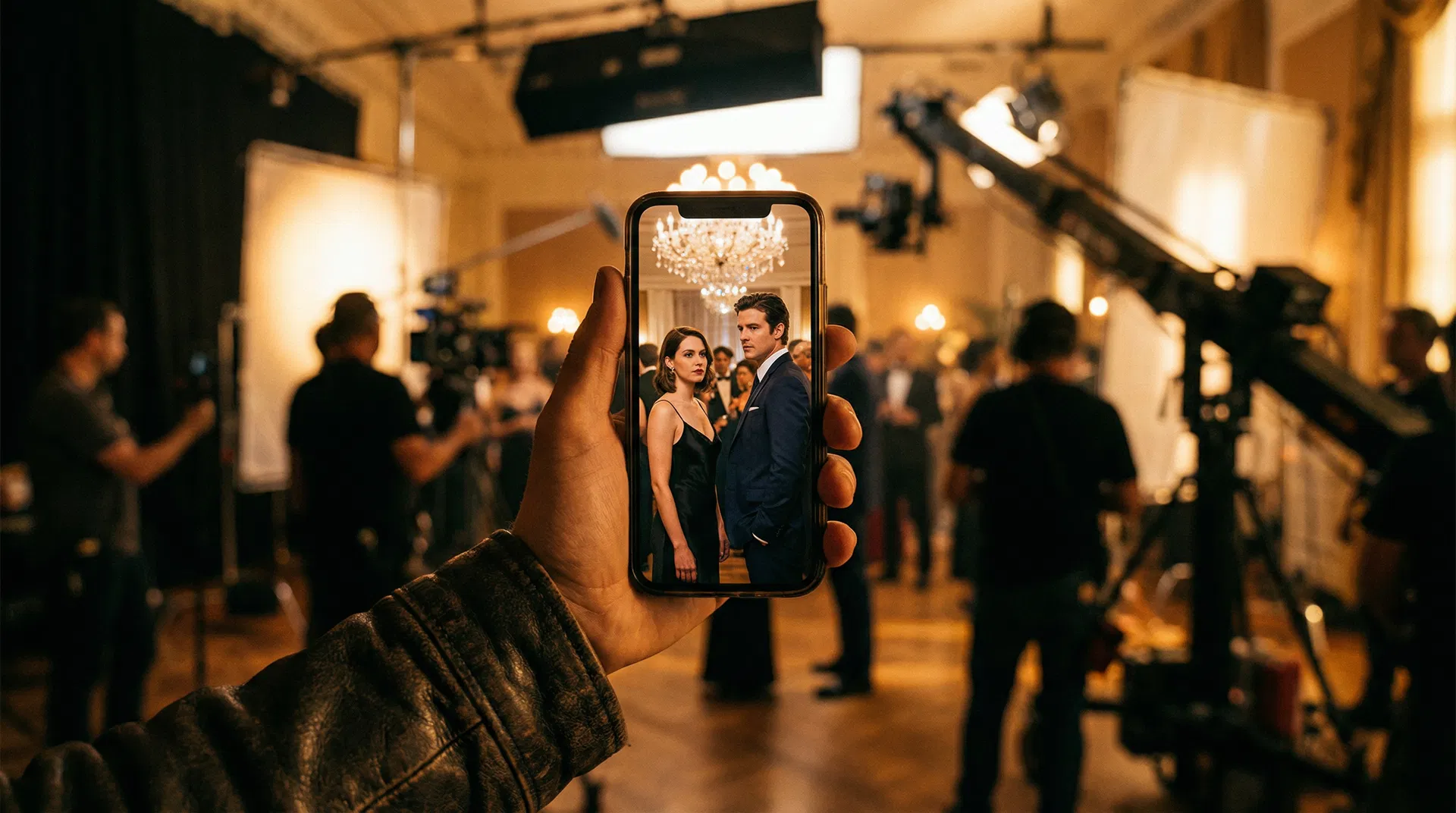
Ryan Murphy's latest FX series, Love Story: John F. Kennedy Jr. & Carolyn Bessette, has dominated cultural conversation since its February 2026 premiere. Critics have called it "stunning," praised its "excellent writing," and noted that "nothing about this series feels cheap." But buried inside the acclaim is a lesson that vertical series creators have understood for years: when the writing is tight, the format doesn't matter.
Love Story isn't a vertical series. It runs 43 to 58 minutes per episode across nine installments on FX and Hulu. But strip away the runtime and the prestige network branding, and what you find is a show built on the exact same storytelling principles that power the best vertical dramas — emotional compression, relentless pacing, and character-driven hooks that make every scene earn its place.
The Storytelling DNA of Love Story
Connor Hines, who created and largely wrote the series, made a deliberate structural choice: each episode functions as a self-contained emotional beat within a larger arc. The pilot opens in 1999 with Carolyn Bessette-Kennedy getting her nails done while paparazzi swarm outside — then flashes back seven years. Episode three, "America's Widow," runs just 43 minutes and covers an entire family tragedy and its emotional aftermath. The pacing is ruthless. There is no filler.
This is precisely how great vertical series work. When you have 60 to 90 seconds per episode, every line of dialogue must advance character or plot. Every scene transition must create a hook. Every emotional beat must land immediately. The writers who succeed in vertical aren't writing "less" — they're writing with more discipline than most traditional TV writers ever have to.
"Nothing about this series feels cheap… the show coveted writers and craftspeople whose dedication bleeds into every monologue delivered."Roger Ebert review of Love Story
Love Story operates with that same discipline, just at a different scale. The dedication — that refusal to waste a single scene — is the hallmark of great vertical storytelling. Whether you have 50 minutes or 90 seconds, the principle is identical: every moment must earn its place.
Why the Format Convergence Is Real
The entertainment industry is converging faster than most people realize. Consider this: Noah Fearnley, one of the biggest lead actors in the vertical drama space, recently secured a major role on Ryan Murphy's next production. His career was built entirely in vertical series. The talent pipeline is no longer one-directional.
Meanwhile, the vertical drama market has exploded globally. Platforms like ReelShort, ShortMax, and DramaBox have turned 90-second episodes into a multi-billion dollar industry. The Guardian recently described vertical dramas as "the sort of thing that could completely transform the entertainment industry." PBS reported that they are "essentially feature-length films broken down into minute-long chunks."
"What's happening isn't a dumbing-down of storytelling. It's a compression of storytelling — and compression demands better writing, not worse."
The Myth That Short Means Shallow
There's a persistent myth in Hollywood that shorter content means shallower content. That vertical series are somehow lesser because they run 90 seconds instead of 50 minutes. Love Story demolishes this argument from the other direction.
The show's most powerful moments aren't the long, sweeping sequences. They're the compressed ones. Carolyn asking her nail technician to switch from red to neutral — a 30-second scene that communicates an entire character arc of lost autonomy. John failing the bar exam for the second time, conveyed in a single reaction shot. Jacqueline Kennedy Onassis, played by Naomi Watts, controlling her son's narrative through body language alone.
These are vertical storytelling techniques deployed in a prestige format. The emotional compression. The visual storytelling. The trust that the audience will fill in the gaps. Every great vertical series creator uses these same tools — they just do it in a tighter frame.
What This Means for Vertical Series Creators
If you're building a vertical series right now, Love Story should be required viewing — not because you're making the same thing, but because it validates the storytelling principles you're already using.
Character-first writing
Love Story works because Carolyn and John are fully realized characters from their first scene. Vertical series that open with character — not plot — hook viewers faster and retain them longer.
Emotional hooks over plot hooks
The show doesn't rely on cliffhangers or mystery boxes. It relies on emotional stakes. Will Carolyn lose herself? Will John escape his family's shadow? These are the same stakes that drive the best vertical dramas — personal, intimate, and immediately felt.
Every scene earns its place
At 43 minutes, episode three of Love Story is tighter than most 22-minute network comedies. In vertical, you don't have the luxury of a wasted scene. But the principle is the same: if a scene doesn't move character or story forward, cut it.
Visual storytelling over exposition
The show communicates through wardrobe, body language, and production design as much as dialogue. Vertical series, shot in 9:16 for mobile screens, demand even more visual economy. The best ones tell stories through faces, not words.
The Real Question Isn't Format — It's Craft
Ryan Murphy has built an empire on understanding what audiences want before they know they want it. American Horror Story redefined anthology television. Pose brought ballroom culture to mainstream audiences. Now Love Story is proving that emotionally compressed, character-driven storytelling is the future of premium content — whether it runs 50 minutes on FX or 90 seconds on a phone screen.
The vertical series format isn't a limitation. It's a discipline. And the creators who treat it as such — who bring the same rigor to a 90-second episode that Connor Hines brought to Love Story — are the ones building the next generation of entertainment.
"The writing doesn't have to be sacrificed. In fact, in vertical, the writing is all you have. And that's exactly why it matters more."
About the Author
Guy Chachkes is the founder of Vertical Series Launch and has produced over 15,000 scenes in vertical format at Reelarc Studios. The 30-Day Vertical Series Sprint takes creators from concept to 10 filmed episodes.